Pascal Advisory is the consulting practice of the Pascal Initiative. Organizations hire us to build and calibrate forecasting and rating systems, to validate models honestly through calibration, out-of-sample tests, and comparison with markets and open benchmarks, and to analyze decisions made under uncertainty. We also build the data engineering that keeps that work running. We bring the same methods Pascal Institute uses to publish its ratings and score every forecast in public.
Most of our work starts with a forecast or a model that people need to trust, or a decision that depends on one. Data engineering supports the rest: a model is only as reliable as the data that feeds it.
Forecasting and Rating Systems
Rating systems and probability forecasts that turn past results into a measured view of strength and a calibrated probability for what comes next.
Rating and ranking system design
Probability forecasts built from ratings and other inputs
Calibration and honest uncertainty estimates
Routines to publish, record, and score forecasts
Model Validation
A plain answer to whether a model works, from calibration, out-of-sample tests, and comparison with markets and open benchmarks.
Probability scoring and calibration checks
Leakage-safe backtesting on unseen periods
Comparison with markets, consensus forecasts, and open benchmarks
Tests of whether a model adds information to the benchmark you already have
Monitoring of live performance
Decision Analysis Under Uncertainty
Framing a choice as an expected-value question, finding where the preferred option changes, and knowing when more information is worth paying for.
Decision framing and alternatives
Expected-value and break-even analysis
Sensitivity to assumptions and the value of information
Decision records that separate process from outcome
Data Engineering
The supporting work: pipelines, data quality checks, and architecture that keep forecasts and models running on data you can trust.
Data pipeline architecture and modernization
ETL/ELT development and optimization
Data quality and validation
Workflow orchestration and cloud data architecture
How We Work
We hold our own work to the standard we bring to yours. Pascal Institute publishes a Pascal Rating for every team in five leagues and, for the NFL and college football, a win probability for every game. Each forecast is recorded before kickoff and scored after the game, and the Track Record compares those forecasts with the betting market’s closing line and with open benchmarks, using the same probability scores for both.
We publish the misses. In 2026 the college football rating trails the closing line, and the NFL rating leads it on a sample too small to separate skill from luck. We report both the same way, and we do not claim an edge over the market that the results have not shown. The ratings methodology explains how each rating is built and how it was tested on past seasons it had not seen, and the weekly Power Rankings score the previous week’s expectations against what happened.
That record is the clearest description of what we offer: forecasts that are accurate, calibrated, and scored in public, with the methods written down and the results reported whichever way they fall. The case studies below apply the same approach to a forecast, a measurement problem, and a single high-stakes decision.
Define the decision the work supports, the alternatives, what success and failure are worth, and the benchmark a new model has to beat.
02
Build and validate
Build or review the forecast, then test it out of sample for accuracy and calibration against a simple baseline and the best available benchmark before anyone relies on it.
03
Record and score
Record forecasts and decisions before outcomes are known, score them afterwards, and set up the reporting that shows when a model needs attention.
Case Studies
These case studies retell Pascal’s own published research, not client engagements. Each one ends with what it means for an organization and links to the full article and its methods. See all case studies.
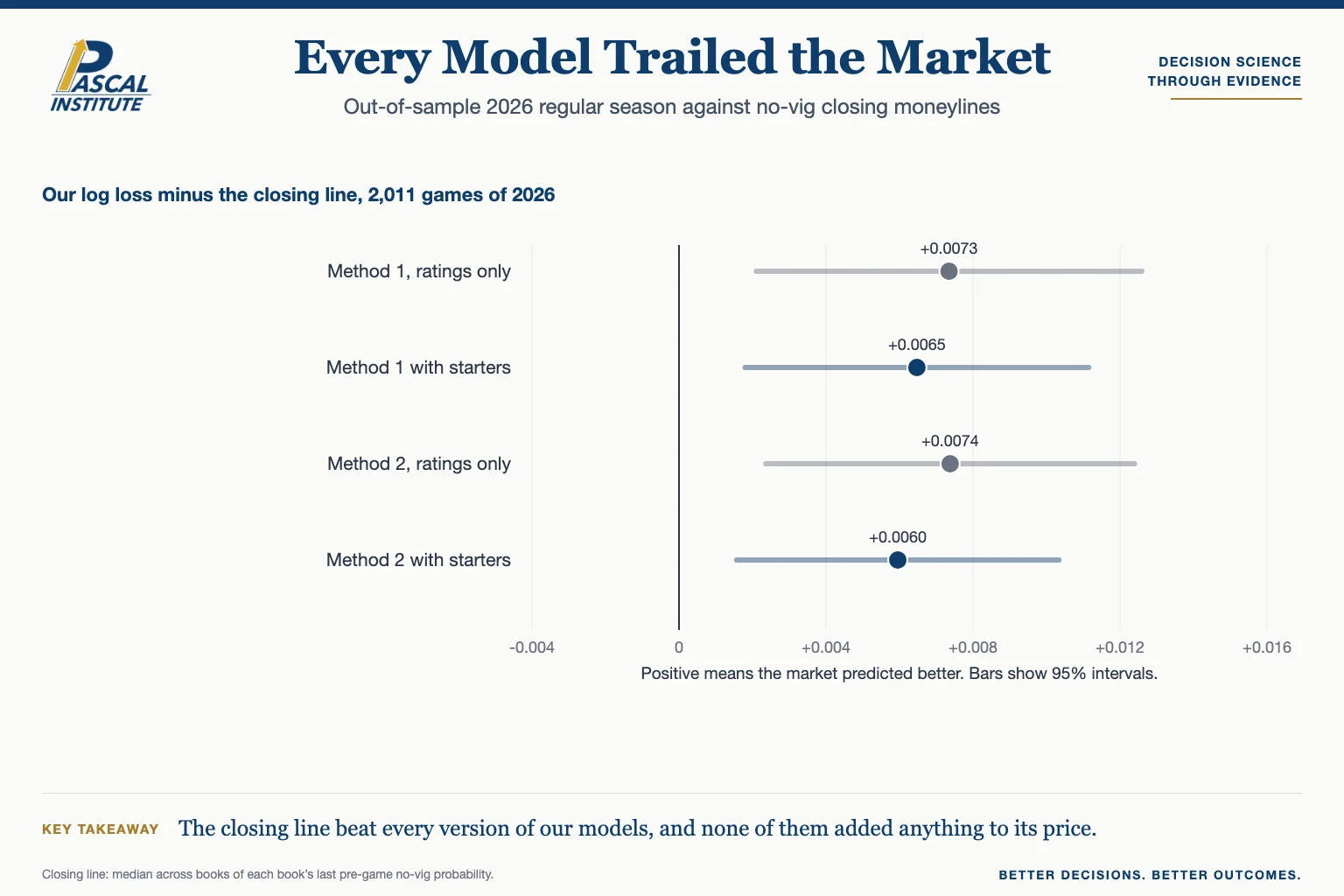
How we built a 2026 World Series forecast from the Pascal Rating and probable starters, validated it on ten past postseasons, and found that the futures market already knew what it knew.
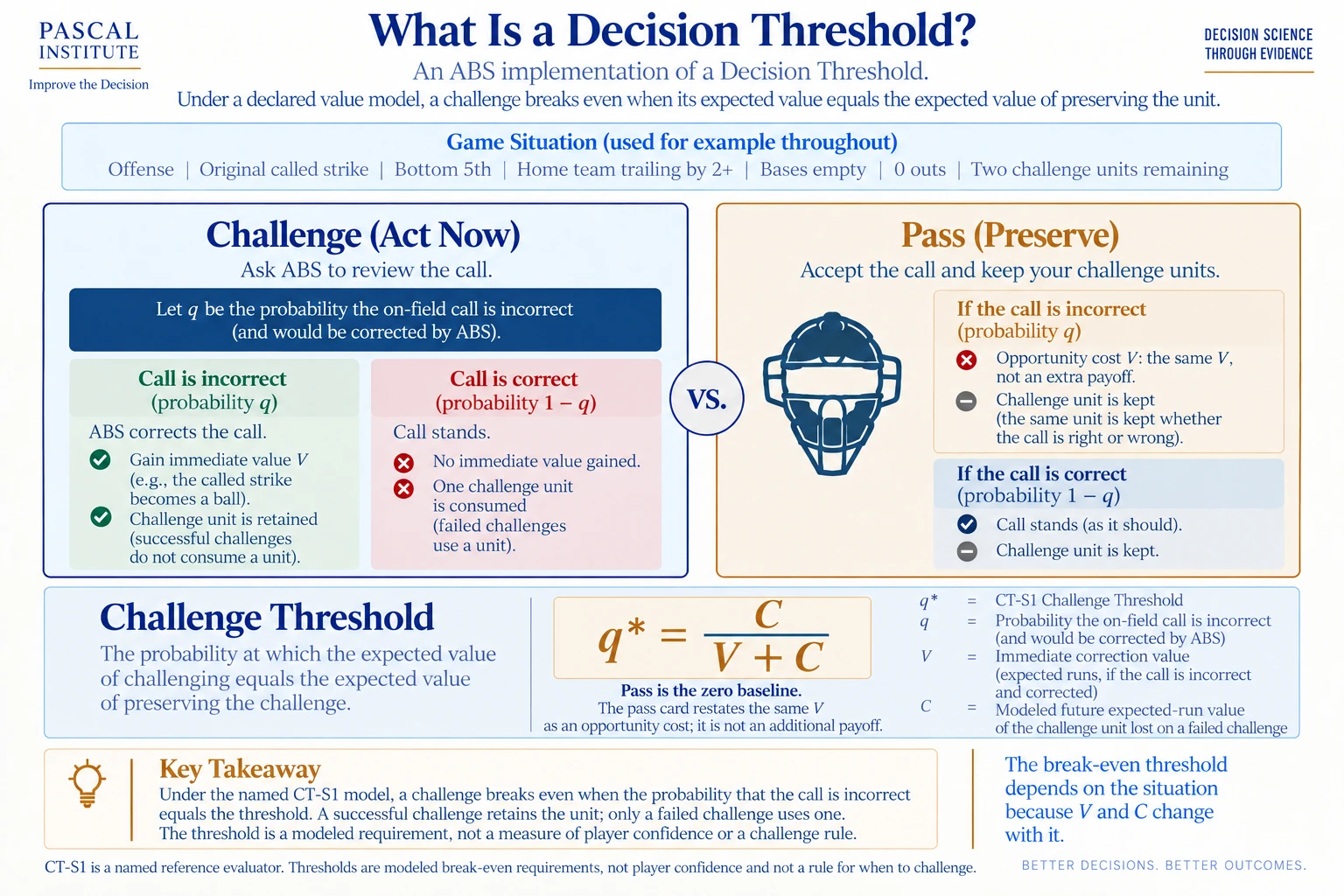
Five studies of MLB's Automated Ball-Strike challenge: how we framed a two-second decision, measured how often players act on a missed call, and put a price on a challenge.
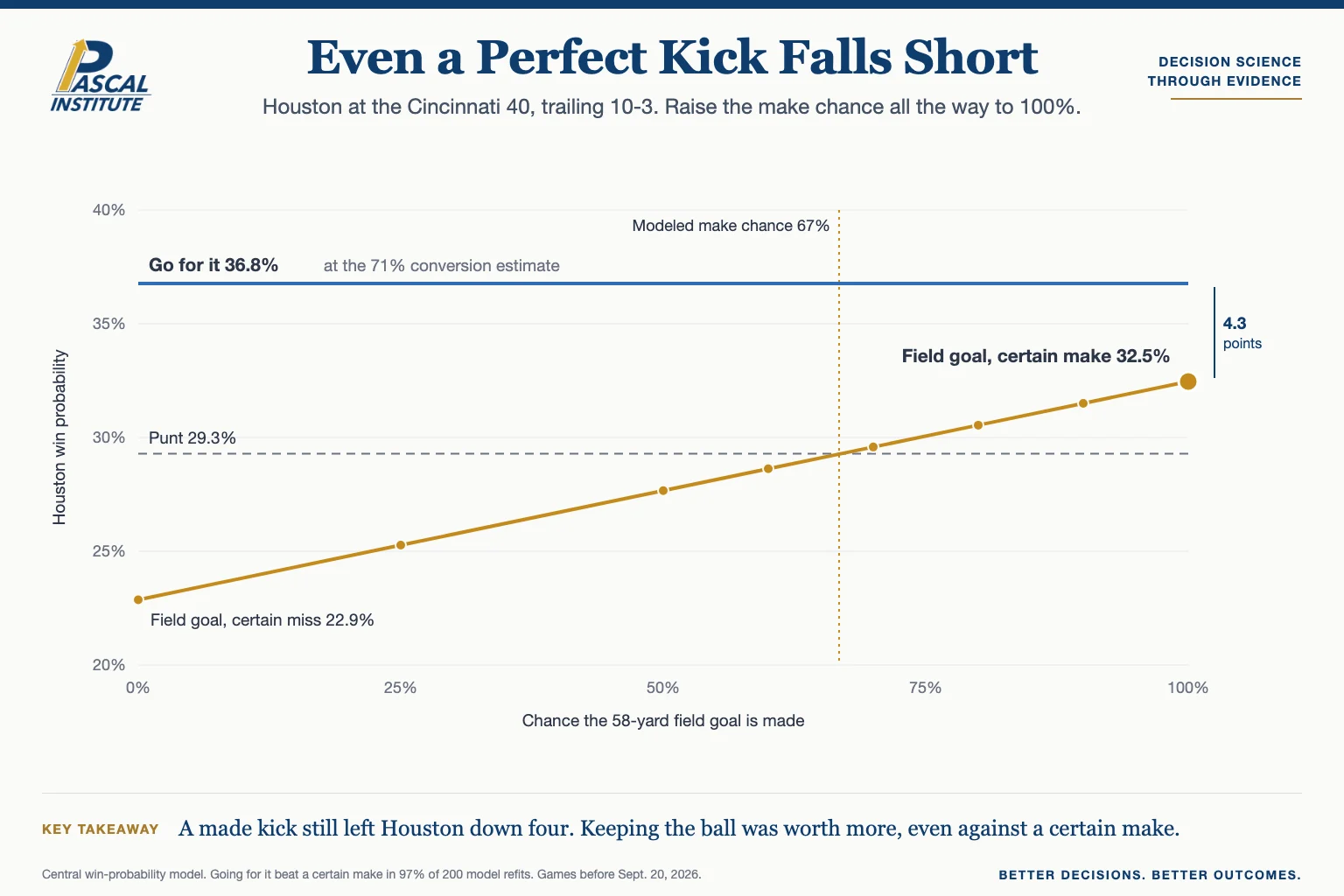
How we evaluated an NFL fourth-and-one decision before knowing the result, by asking what success was worth and where the preferred choice would change.
A defined, independent review of a forecast, rating system, model, or decision process, ending in a written finding and prioritized recommendations.
Deliverables may include
Accuracy and calibration results
Comparison with baselines and benchmarks
Weaknesses, risks, and opportunities
Prioritized recommendations and a roadmap
Focused Implementation
A scoped project to build or rebuild a forecast or rating system, a validation process, a decision analysis, or the data pipeline behind them.
Deliverables may include
A defined model, analysis, or pipeline
Out-of-sample validation and testing
Documentation and knowledge transfer
Agreed acceptance criteria
Ongoing Advisory
Recurring support for teams that run forecasts and models in production and want them scored and reviewed over time.
Support may include
Scheduled performance and calibration reviews
Reviews of model changes
Decision reviews that separate process from outcome
Analytical strategy and technical planning
Scope, pricing, and timing are agreed for each engagement before work begins.
Who You Work With
Pascal Advisory is led by Christopher Merry, Chief Decision Scientist at Pascal Institute and founder of the Pascal Initiative. He has more than 25 years of experience in technology, data engineering, and analytics, and he writes the research these case studies draw on.
Discuss a Forecasting or Decision Problem
Tell us what you are trying to forecast, test, or decide. We will reply by email and say plainly whether Pascal is the right partner.