
Research & Insights
Decision Science, Tested in Practice
Pascal Institute uses research, case studies, and real-world data to examine how people make decisions under uncertainty.
We reconstruct what was knowable at the time, compare expectations with outcomes, and report what the evidence supports, including inconvenient results. Our current work includes the Pascal team ratings and the Power Rankings built from them, the MLB ABS challenge system, the hidden cost of an intentional walk, what a hitter's contact point says about power and hits, what a fourth-and-one decision teaches about valuing business opportunities, how a World Series forecast built from team ratings compares with the betting market, Cal Raleigh’s changing offensive performance, and what Brandon Pfaadt’s results reveal about evaluating process.
Current Research
Pascal Ratings and Power Rankings
Every Pascal Rating is a research result that faces new evidence each week. We publish a rating for each team in MLB, the NFL, college football, the NBA, and the NHL. For the NFL and college football we turn it into a win probability for each game and score those forecasts after the games are played. The methodology explains how each sport's method was replayed over past seasons and checked on games it had not seen, and the football ratings pages compare the ratings with the betting market's closing line on every completed game, whether the result favors the rating or the market.
- Team Ratings
Current ratings and game forecasts for every supported league. - Ratings Methodology
How the ratings are built, validated, and scored. - NFL and College Football ratings against the closing line
A season record of the rating's probabilities beside the market's, game by game. - Pascal Power Rankings
Weekly editions built from the ratings, kept online so each week can be checked against what happened. - Weekly Ratings Review: NFL Favorites Beat Expectations as College Football Favorites Fell Short
How the Pascal Rating's published expectations scored in NFL Week 5 and college football Week 6, and where each rating stands against the betting market's closing line this season.
ABS Challenge System
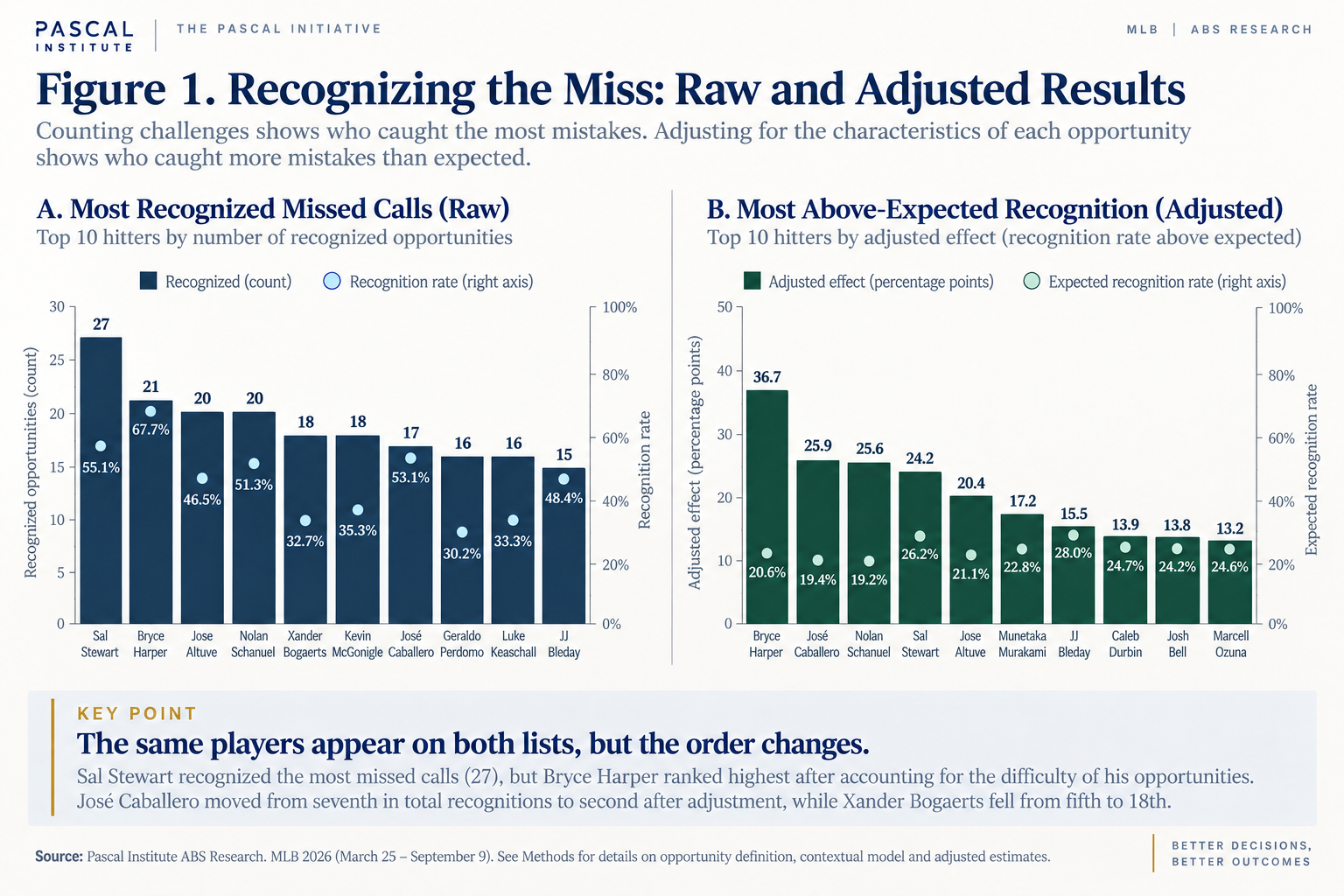
Raw challenge totals and opportunity-adjusted recognition answer different questions.
The ABS challenge system turns every called pitch into a rapid decision under uncertainty. Across five linked studies, Pascal reconstructed the 2026 challenge environment, measured the recognition gap, identified how pitch geometry and game context change the challenge threshold, tested whether a hitter’s prior behavior improves prediction after opportunity difficulty is accounted for, estimated what a challenge is worth, and built a named reference for the break-even point of a challenge decision.
- Article 1 · One in Five: Inside the ABS Recognition Gap
How often hitters corrected eligible incorrect called strikes, and how often they did not. - Article 2 · The Challenge Threshold
How the location of a missed call and the situation surrounding it shape the decision to challenge. - Article 3 · Who Sees the Miss?
Whether historical hitter recognition behavior adds information about future behavior after accounting for opportunity difficulty. - Article 4 · What Is a Challenge Worth?
The value of correcting a call, the cost of being wrong and the danger of saving a challenge for an opportunity that may never arrive. - Article 5 · Pricing an ABS Challenge
How strong the evidence needs to be before a challenge is worth using, and a named reference for the break-even point.
One Lean, One Coin Flip
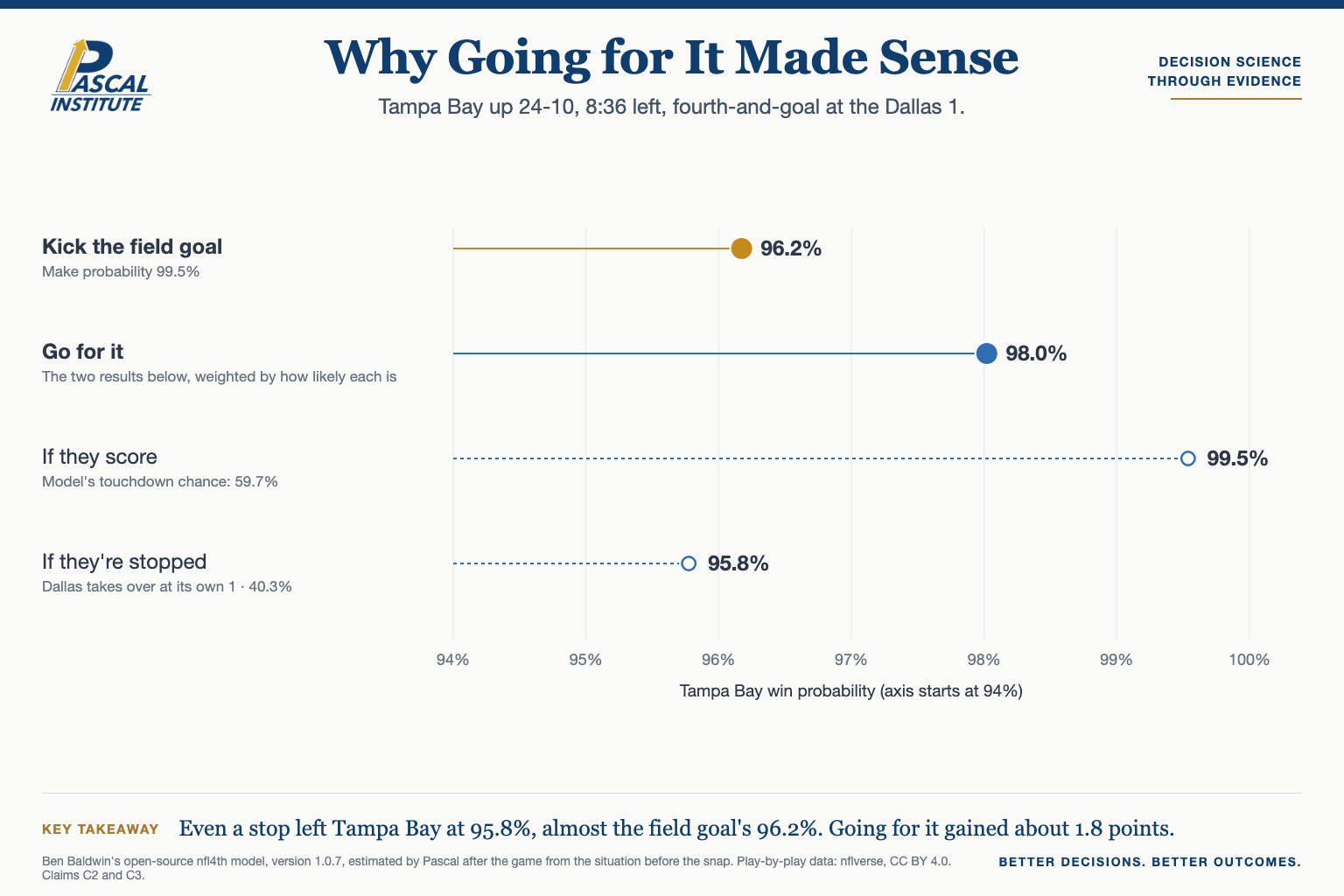
Two calls failed. Only one was the call the model favored.
Late in Tampa Bay's 24-16 win at Dallas, the Buccaneers went for it on fourth-and-goal from the 1 and the Cowboys went for two. Both failed. Judged only on what was known before each snap, Ben Baldwin's open-source decision model rated going for it a lean and going for two a toss-up. Win probability is the share of games a team in that situation would be expected to win, and a point is one percentage point of that chance.
- One Lean, One Coin Flip
What two failed calls in Tampa Bay's win at Dallas can teach us about judging a decision before the result.
Where Home Runs Come From
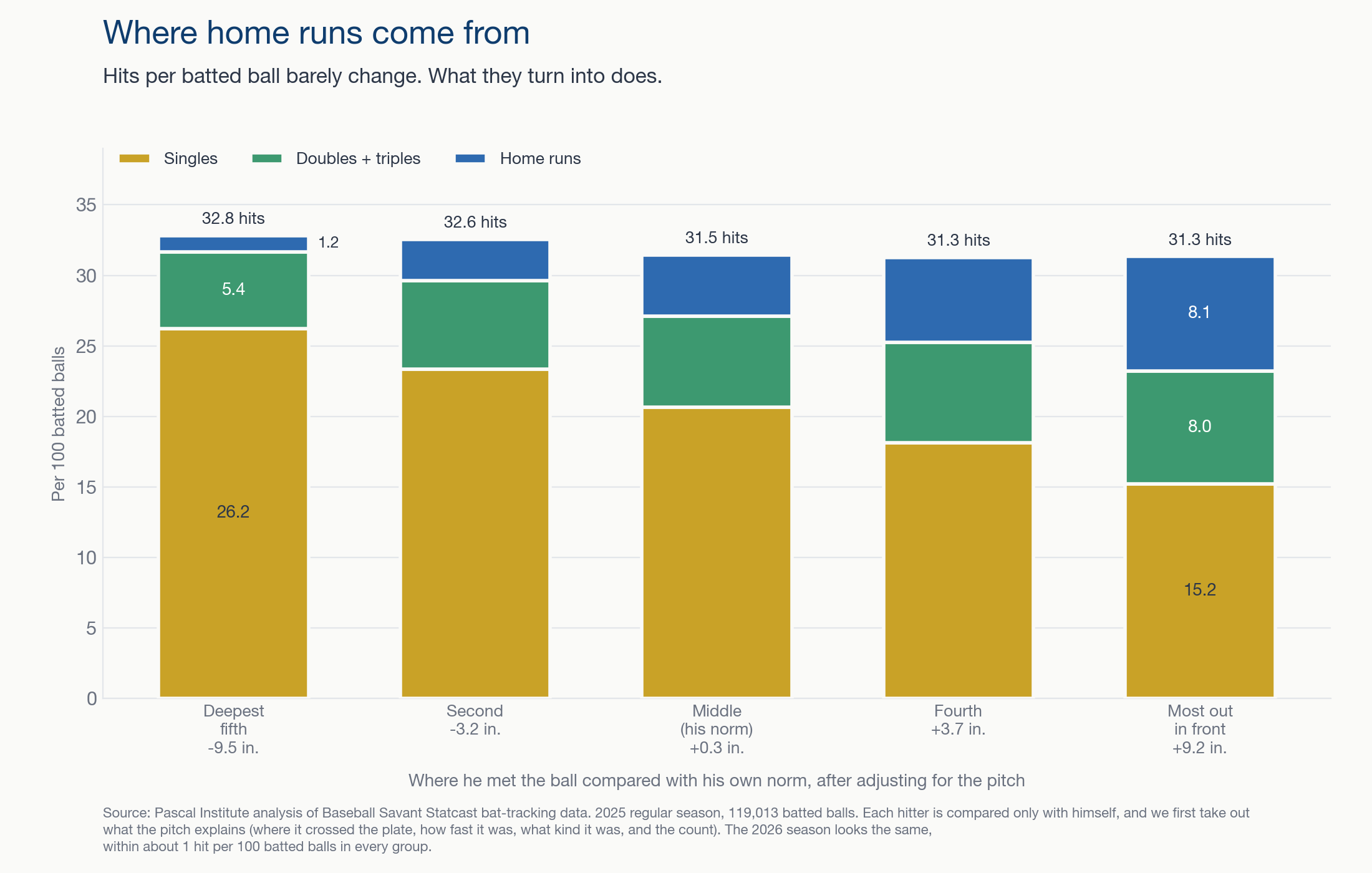
Out in front is where home runs come from, not extra hits.
Statcast now measures where the bat meets the ball. Comparing each hitter only with himself, and first taking out what the pitch explains, we found that contact further out in front turned singles into extra-base hits and home runs while hits per batted ball barely changed. In 2025, the season we held back to test the idea, home runs rose from about 1 to about 8 per 100 batted balls from the deepest to the most out-front contact. Under our models, recent contact point did not improve a forecast of a hitter's next game.
- Where Home Runs Come From
What two seasons of Statcast contact points can teach us about the difference between power and hits.
What the Turang Walk Traded
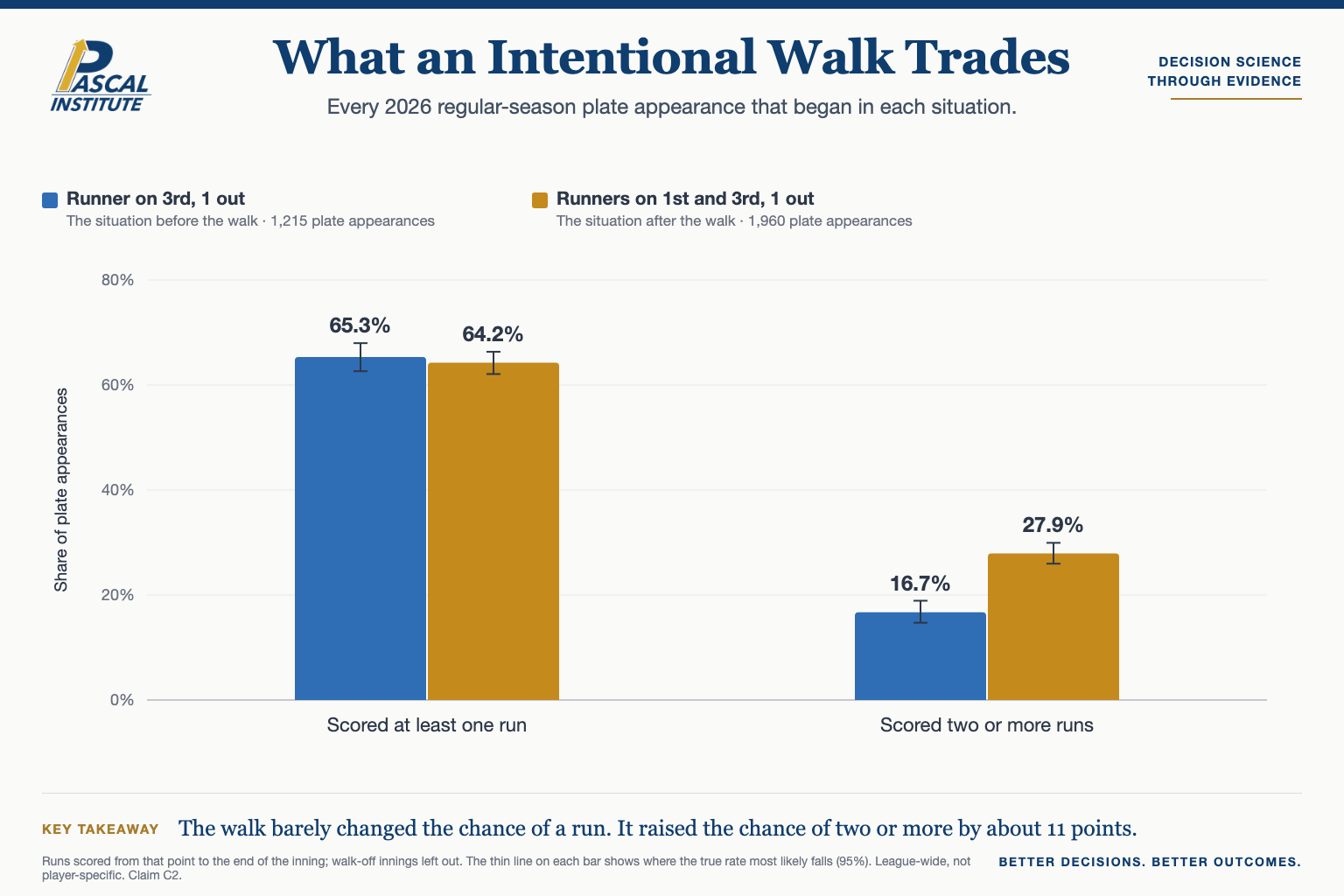
A walk that did not make a run less likely.
In Game 2 of the 2026 NLCS, the Dodgers intentionally walked Brice Turang with the score tied in the sixth inning and a runner on third. Across the 2026 regular season, that walk barely changed how often teams scored, but it raised the chance of two or more runs from 16.7 to 27.9 percent. Under our model, which we settled on after seeing our first results, and judged only on what was knowable before the walk, it cost the Dodgers about 2 points of win probability.
- What the Turang Walk Traded
What one intentional walk in NLCS Game 2 can teach us about the hidden cost of playing it safe.
When to Pull the Starter
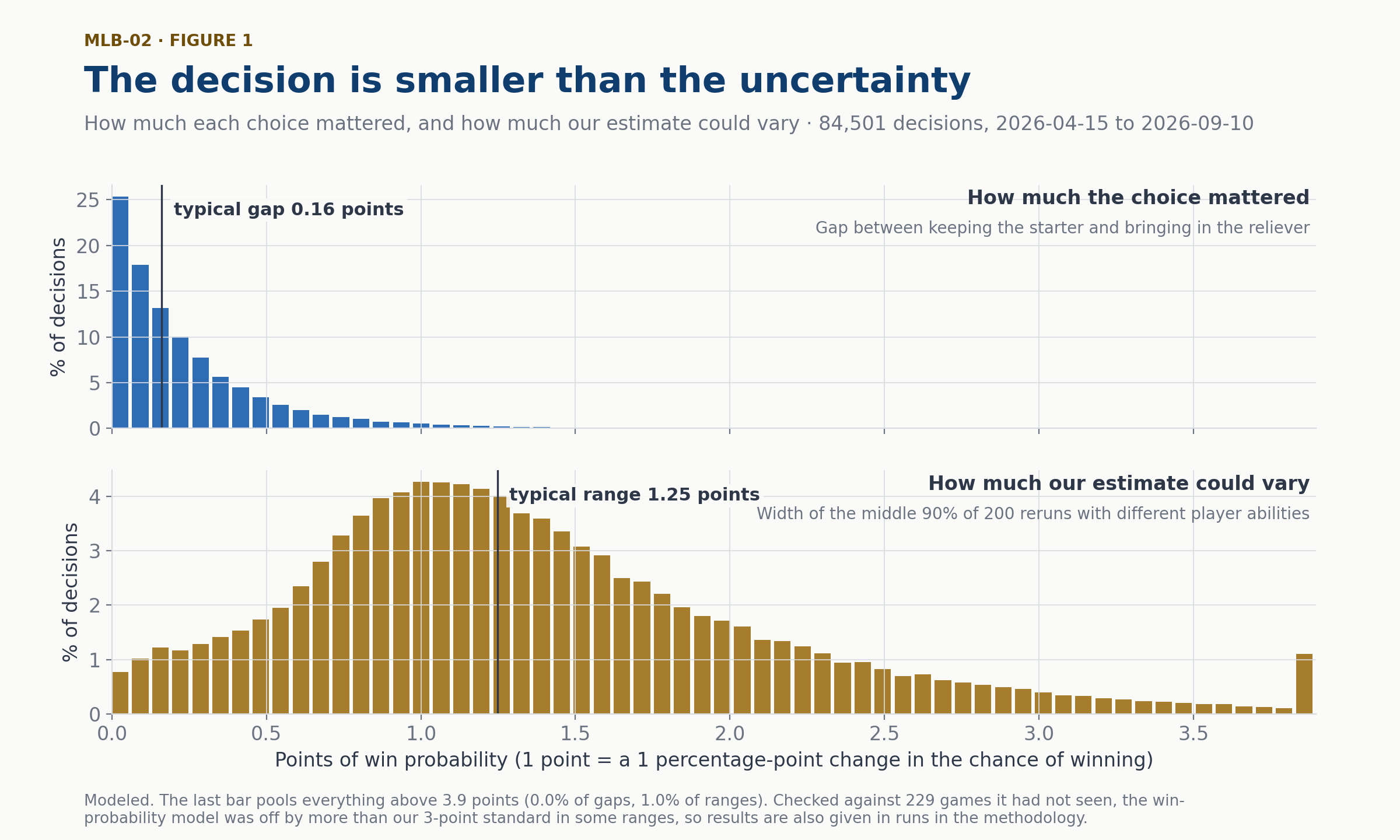
The decision is smaller than the argument.
A pitching change is argued about after the fact, but it is really a decision made before every batter. We priced 84,501 of those moments from 2026 starts using only what was knowable before each game. Most were too close to call given our uncertainty about the players, the margin moved with every batter, and, assuming the reliever who entered was available earlier, the league's timing is consistent with a bullpen cost of roughly 0.05 to 0.15 points of win probability per batter.
- When to Pull the Starter
Why most pitching changes are closer calls than the argument suggests, and what the league's timing is consistent with.
Not All Field Goals Weigh the Same
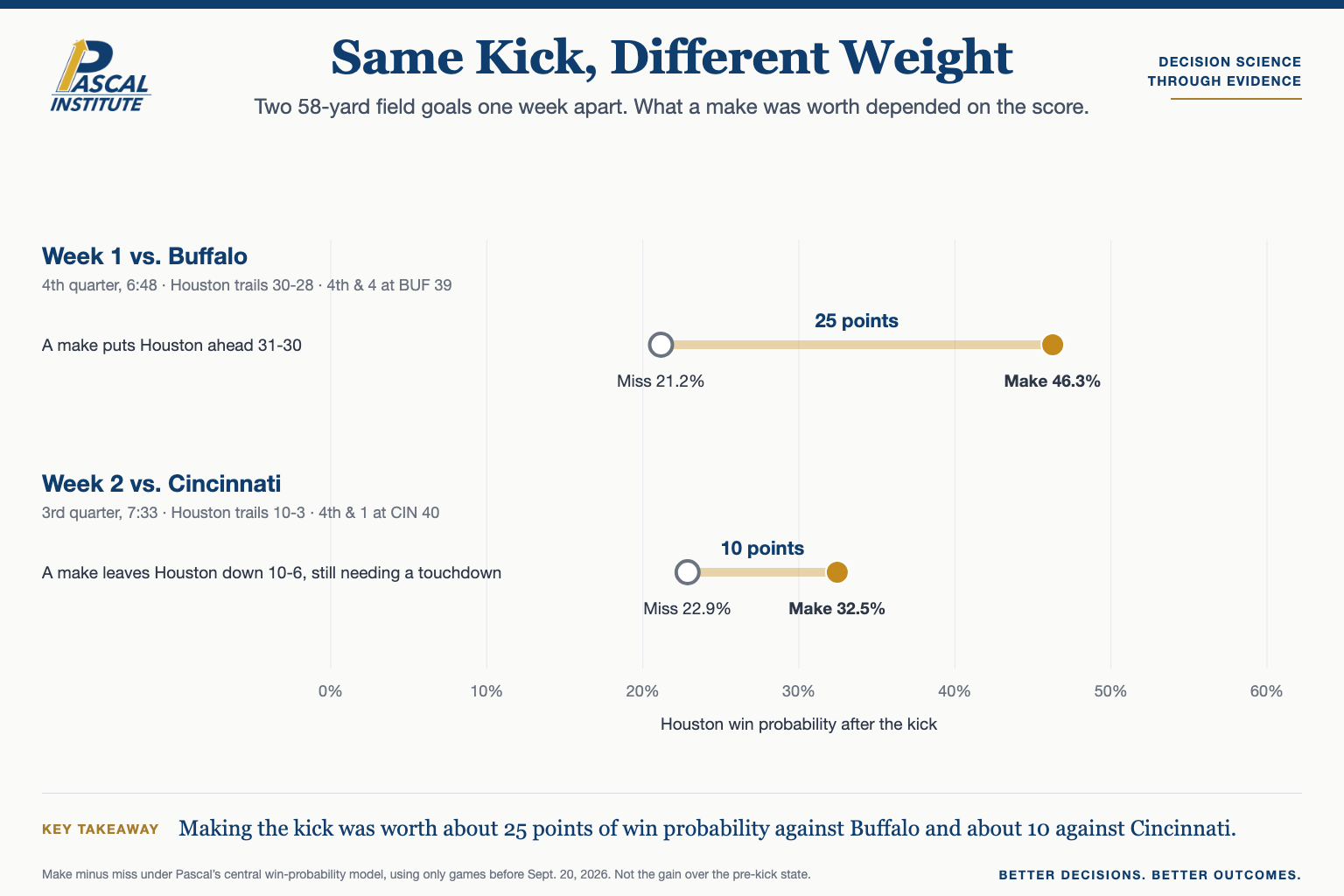
The same kick, worth very different amounts.
Houston trusted Ka’imi Fairbairn with a 58-yard field goal because he had made one from the same spot a week earlier. But even a certain make would have left the Texans behind and still needing a touchdown. This case uses a fourth-and-one decision to show what Decision Science adds for business: probability says how often an opportunity succeeds, value says what success is worth, and the break-even point says when the evidence is strong enough to act.
- Not All Field Goals Weigh the Same
What a fourth-and-one decision can teach us about Decision Science in business.
What the Market Knew
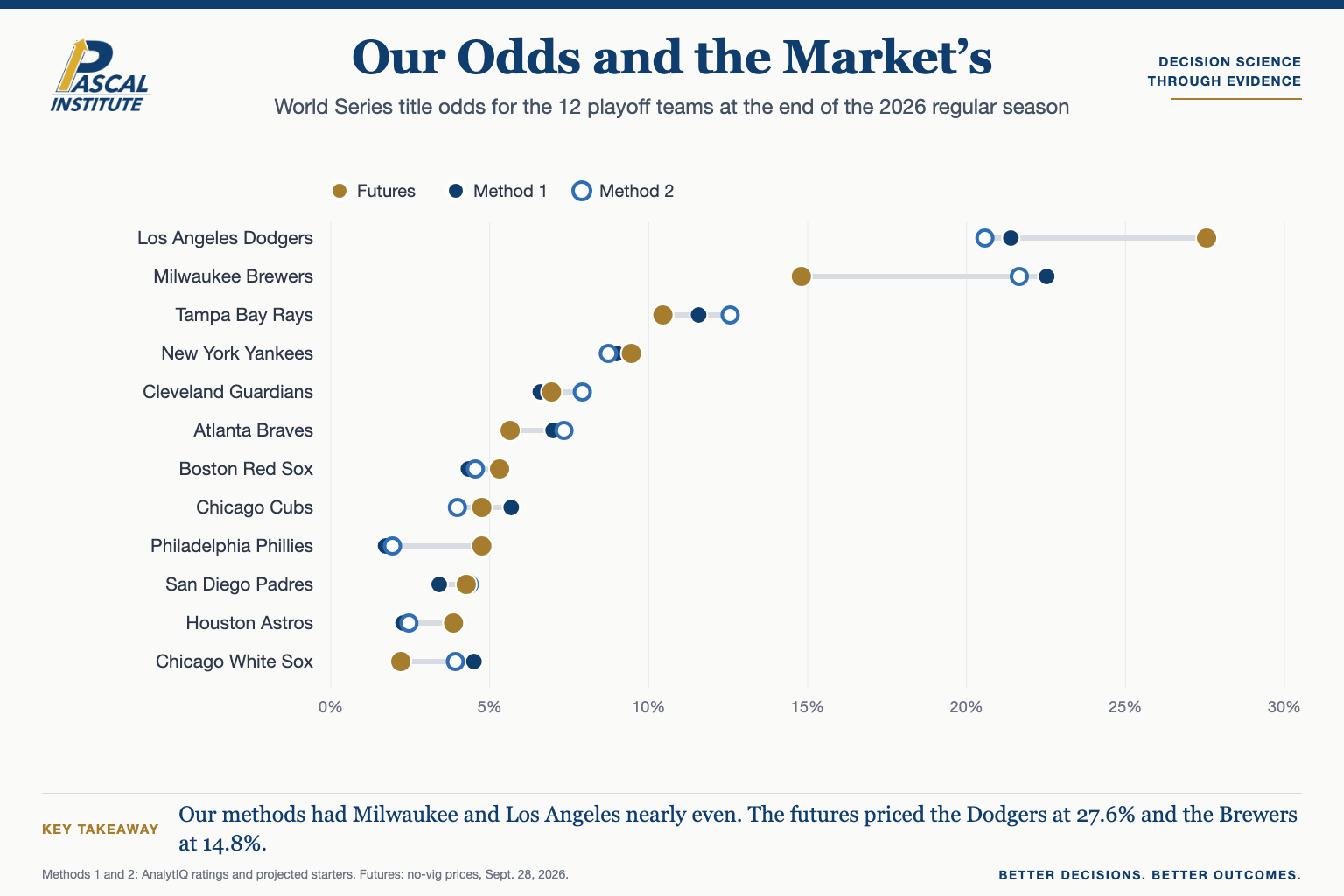
Our forecasts and the market agreed on most of the field and disagreed about the two best teams.
We built two forecasts of the 2026 World Series from AnalytIQ team ratings, one a bracket simulation and one a machine learning model, and froze them before the first postseason pitch. Both made Milwaukee a slight favorite; the betting market favored the Dodgers. Tested over ten postseasons and against the closing line on two thousand 2026 games, the case shows what a starting pitcher adds, why a bullpen does not, and why a forecast built from public information struggles to beat a market that already knows it.
- What the Market Knew
Forecasting the 2026 World Series from team ratings, and what the betting market saw that our models did not. - 2026 World Series odds
Title odds for every playoff team, round by round, with projected rotations.
Cal Raleigh: When Regression Becomes Something More
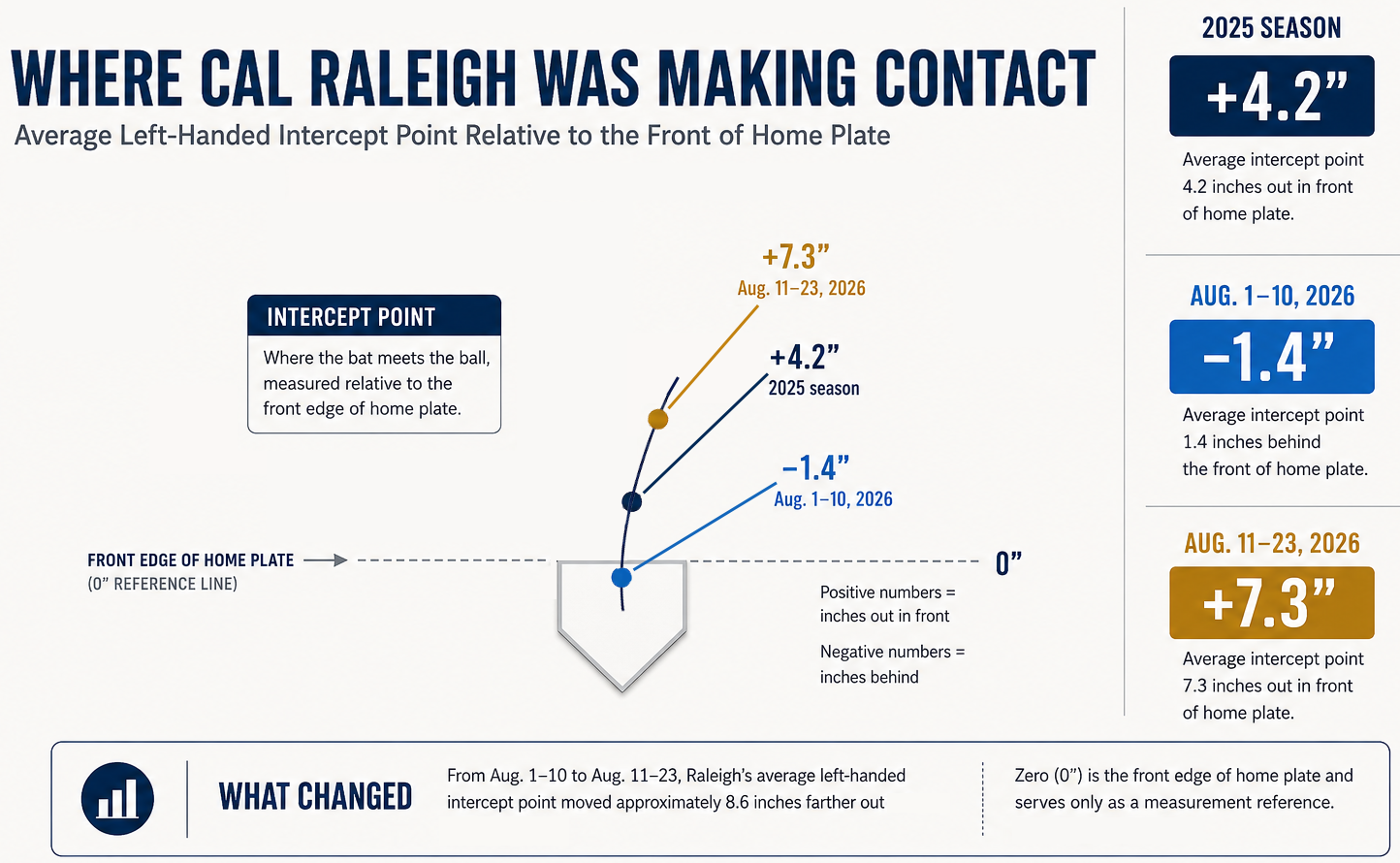
Raleigh followed one of the greatest offensive seasons ever produced by a catcher with a dramatic decline in 2026. Regression was predictable; its magnitude and character were not. Using Statcast data, projections, reporting, swing and contact measurements, and prior research, this case separates real skill change from favorable variance and examines how expectations and performance feedback may interact.
Decision question: Can luck affect future performance not only through the result it produces, but through the expectations and feedback that result helps create?
Explore the Cal Raleigh case study →
Brandon Pfaadt: When the Outcome Hides the Process
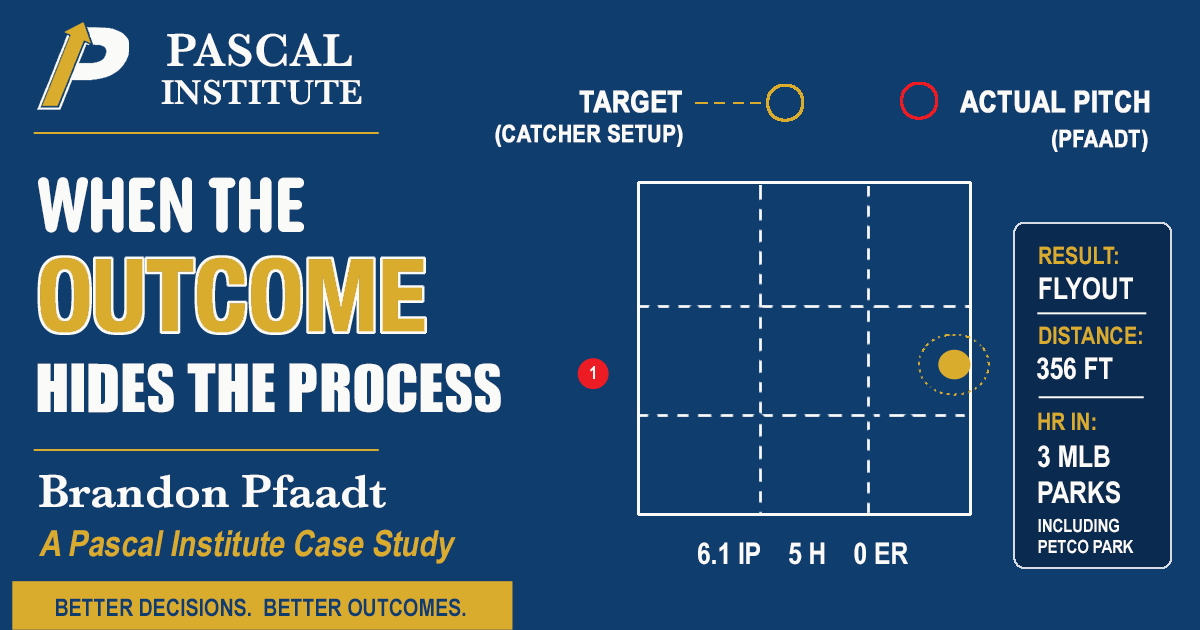
Pfaadt allowed no earned runs over 6⅔ innings against the San Diego Padres. The box score suggests a strong performance, but a pitch-by-pitch review of the first inning tells a more complicated story. Using MLB Film Room, Statcast data, pitch location, and the catcher’s apparent targets, the case examines what happens when execution and outcome disagree.
Decision principle: Outcomes provide evidence, but they do not tell us everything about the quality of the process that produced them.
Explore the Brandon Pfaadt case study →
How Pascal Research Works
Pascal research follows a small set of practical commitments:
- Start with a question, not a conclusion. Investigate an idea instead of searching for confirmation.
- Record expectations before outcomes when possible. Forecasts are more useful when they cannot be rewritten afterward.
- Measure uncertainty. Prefer probabilities, ranges, and explicit assumptions to unsupported certainty.
- Separate process from outcome. Results matter, but they do not fully describe the decisions that produced them.
- Report inconvenient results and update. Evidence that changes a conclusion is part of the process, not a failure of it.
Why Sports?
Sports provide an unusually useful laboratory for decisions under uncertainty. Events occur frequently, outcomes are observable, historical data is abundant, and results arrive quickly enough to create repeated feedback. Forecasts and models eventually have to face reality.
The lessons extend beyond sports to investing, business, forecasting, resource allocation, and other environments where feedback is slower or less obvious.
What did we expect, what actually happened, why were they different, and what should change next time?
That is how outcomes become feedback, and how feedback creates the opportunity for compounding improvement.
From Research to Public Evidence
The Pascal Ratings, Power Rankings, and Pick of the Day put these principles into public practice, with every forecast recorded before the game and scored after it. AnalytIQ, our modeling app, applies the same scoring to models that members build and test themselves.